Dieter Rams designed a radio that refused to shout
The Braun T3 was pocket-sized, grey, and indifferent to trends. Rams called it obvious. The rest of the industry took thirty years to understand what he meant.
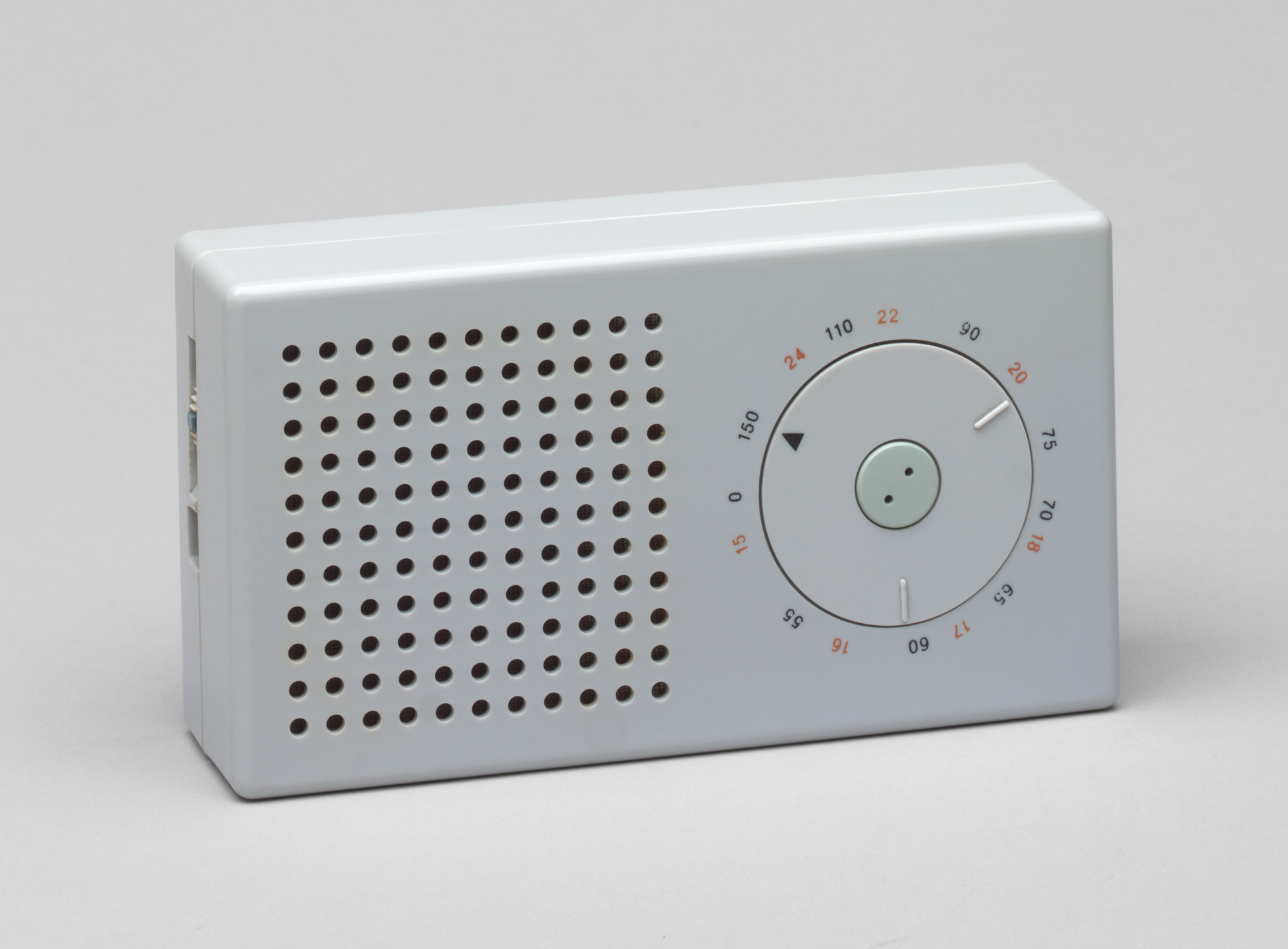
In 1958, Dieter Rams designed a pocket transistor radio for Braun. It was grey. It had a speaker grille on the front, a tuning dial on the side, and nothing else. It fit in a shirt pocket. It received AM radio. It had no name beyond its model number, T3, because Rams believed that naming objects was a kind of vanity.
He called the design obvious, which is the most Rams thing he could have said. He meant that the form followed so directly from the function that there was nothing left to decide about how it should look. The object answered its own question.
The ten principles, lived
Rams would later articulate his design philosophy into ten principles, the most famous being “good design is as little design as possible.” Designers quote this constantly. Very few products embody it. The T3 did, fifteen years before he wrote it down.
The speaker grille was a grid because a grid passes sound. The dial was on the side because the thumb reaches it naturally while the hand holds the device. The proportions were derived from the pocket it was designed to fit. Every decision had a reason, and none of the reasons were aesthetic.
Rams has said that the biggest problem with design is that so much of what is designed is not designed at all — it is styled. The T3 was not styled. It was designed.
This distinction matters more now than it did in 1958. We are surrounded by styling. Products that look like they were designed by the same algorithm because they were. A grid of circles on a white background. Rounded corners set to 12px. A sans-serif typeface at exactly 14px. The category defaults applied uniformly to everything.
What it cost Braun to make this
The T3 was not cheap to produce. Rams refused to use injection-molded plastic in the way it was typically used, hiding the material’s limitations under texture and color. The T3 was smooth, and that smoothness showed every imperfection. Braun had to tighten its manufacturing tolerances to make the objects look the way Rams designed them.
They did it. That decision — to absorb the production cost in order to maintain the design integrity — is what separated Braun from every other consumer electronics company of that era. It is also why Braun products from the fifties and sixties are still collected, still studied, and still being referenced by designers who weren’t born when they were made.
Why it matters now
Jonathan Ive has said publicly that Rams was the most significant influence on his work at Apple. The original iMac, the iPod, the first iPhone — all of them carry the logic of the T3. Not the aesthetic, but the logic. The belief that removing things is harder than adding them. That constraint is generative. That the best version of an object is the one where there is nothing left to take away.
The T3 was made in 1958 and discontinued in the early 1970s. It is still the correct answer to the question of what a radio should be. That is a remarkable thing for any object to be.