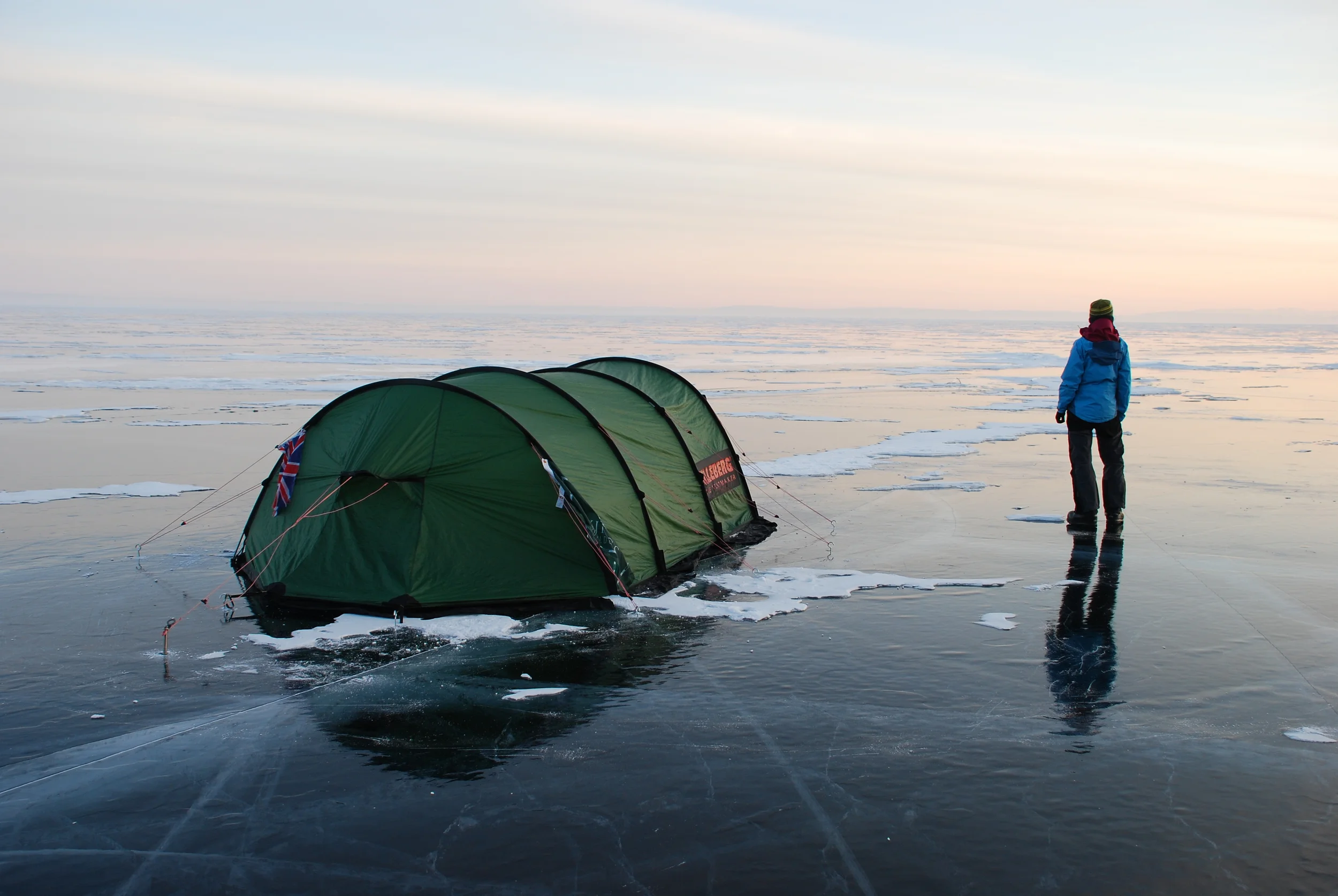
Bo Hilleberg solved one tent problem for fifty years
He was frustrated that pitching a tent in rain meant getting wet before you had shelter. He fixed it once, then spent the rest of his life making sure it stayed fixed.
In 1971, a Swedish forester named Bo Hilleberg was frustrated. Not with the outdoors — he loved the outdoors. With tents. Specifically, with the fact that every tent on the market required you to pitch the inner tent first and then cover it with the rain fly, which meant that in any real weather, the interior was already wet before you could sleep in it.
This seemed wrong to him. Not inconvenient — wrong. So he designed a tent where the inner and outer could be pitched simultaneously, as a single connected unit. You staked it out once. You were sheltered immediately.
That tent became the Hilleberg Keron. The company he built around it, Hilleberg the Tentmaker, has been making variations on that same principle ever since.
The decision that defined everything
What makes Hilleberg interesting isn’t just the simultaneous-pitch system, though that alone is worth the premium. It’s the decision Bo Hilleberg made about where to manufacture.
Every competitor moved production to Asia at some point. Hilleberg never did. The tents are still sewn in Estonia, in a factory the company controls, by people who have been doing this for years. The cost shows up in the price — a Hilleberg tent costs more than almost anything else in its category. So does the quality.
The poles are stronger. The fabrics are heavier. The zippers are overbuilt for the conditions they’re meant to handle. There is no version of a Hilleberg tent that was made cheaper so it could be sold cheaper. Every choice compounds in the same direction.
A Hilleberg tent costs more because it does more, lasts longer, and was made by people who understood that getting those things right required not outsourcing them.
What this looks like in the field
People who use Hilleberg tents don’t replace them. That’s the thing you notice when you talk to serious mountaineers and expedition guides — the tent in the corner of their gear room is the same tent they had ten years ago. It’s been repaired by Hilleberg, because Hilleberg will repair anything they’ve ever made. The fabric has been rewaterproofed. The poles have been replaced once.
But the tent is still there. Still going. Still doing the one thing Bo Hilleberg decided it should do in 1971 without making you wet first.
That kind of object changes the way you think about gear. Not as something you replace when it wears out, but as something you maintain because it was worth having in the first place.