The Architects Who Built Their Own Retreat by Hand
Will Gowland and Harry Kay of Built Works didn't just design a 38-square-metre yoga cabin in East Sussex — they charred the cladding, fired the tiles, and threw the crockery themselves. The difference shows.
objectNumber: 45 category: design title: The Architects Who Built Their Own Retreat by Hand excerpt: Will Gowland and Harry Kay of Built Works didn’t just design a 38-square-metre yoga cabin in East Sussex — they charred the cladding, fired the tiles, and threw the crockery themselves. The difference shows. publishedAt: 2025-07-15 featured: false author: LimitedHype
There is a version of this cabin that exists only on a mood board. Charred timber sourced from a specialist supplier, artisan ceramics ordered from a studio in Hackney, thatch installed by a subcontractor who came on a Tuesday and left by Thursday. It would have looked the same in photographs. It would have been fine.
That is not Yogi’s Cabin.
The Decision to Stay in the Room
Will Gowland and Harry Kay founded Built Works in 2020, and when they created Architects Holiday — their own hospitality offshoot, building retreats structured around a single restorative practice — they handed themselves the most honest brief an architect can receive: make the thing you say matters.
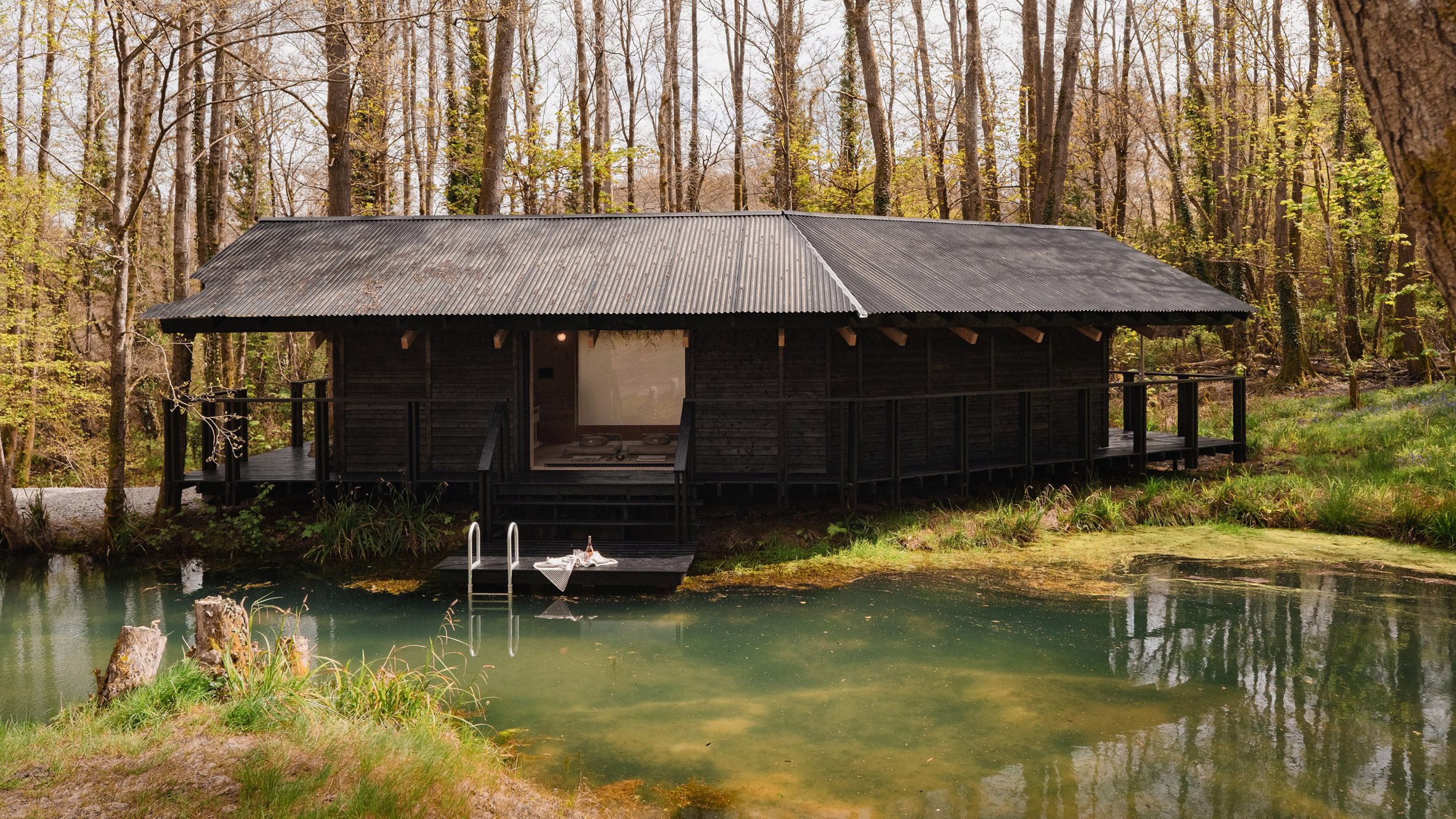
The site is Great Park Farm in East Sussex’s High Weald, a working landscape that has been shaped by exactly the kind of quiet agricultural utility the cabin tries to honour. The local vernacular is drying sheds — spare, functional, unsentimental. Built Works started there and didn’t stray far.
The 38 square metres are wrapped in locally sourced larch, charred by hand using the Japanese Shou Sugi Ban technique, which dates to 18th-century Japan and works on a simple principle: controlled burning closes the grain, repels insects and moisture, and leaves a surface that weathers with integrity rather than against it. Gowland and Kay did the charring themselves. This is not a footnote. When you char timber by hand, you feel the difference between a plank that has taken the flame correctly and one that hasn’t. You can’t approve that over email.
The genuine craft here is not in adopting existing techniques — it’s in the material fact of their hands shaping every element.
Inside, the cabin is lined entirely in Douglas fir. Walls, ceiling, fittings — one wood, one temperature, one material logic. The intention was total continuity: a space that removes the micro-decisions the eye makes when surfaces compete, so that a person arriving to practise yoga has one less thing pulling them out of their body. Stainless steel appears only in the kitchen and bathroom, chosen for its blunt utility and its willingness to step back from the timber. It’s the visual equivalent of a stage manager: necessary, invisible, not trying to be the point.
What the Hands Remember
The bathroom tiles were made with the help of Kay’s children. The crockery came from his wife’s ceramic practice. Beneath the roof, strips of thatch made from local heather and birch tips create what the studio calls “living eaves” — habitat for insects and birds, a material that is genuinely alive rather than decorative. A continuous engawa deck runs the perimeter, a transitional threshold borrowed from Japanese domestic architecture of the Heian period, here reinterpreted as a contemplative edge between the interior stillness and the pond beyond.
Each of these decisions carries a tradeoff. Hand-charring is slower and less consistent than mechanical processes. Making your own tiles means accepting variation. Specifying heather thatch means finding someone who still works with it and accepting that it will behave on its own schedule. The architects knew this. They chose it anyway, because the alternative — a cabin that performs materiality rather than contains it — would have been a different project entirely, and a less honest one.
There is a tendency, when describing buildings like this, to reach for language about atmosphere and feeling, as though the experience is separate from the construction. It isn’t. The reason the interior reads as restful rather than styled is that every surface was resolved the same way: by someone who made a considered decision and then made the thing with their own hands. The Douglas fir isn’t calming because it’s wood. It’s calming because the room behind it is calm, and that calm came from somewhere specific.
Why It Matters
Yoga retreats are not a shortage category. The internet is full of them. What’s rarer is a building where the architects’ toil is physically present in the object — where the hand that charred the cladding and the hand that drew the plan belong to the same person, and that person understood why the difference mattered before they started.
Yogi’s Cabin exists in the High Weald as a place to be still for a few days. But it also exists as an argument: that the quality of attention a maker brings to a thing transfers into the thing, and that the people who use it can feel that transfer even when they can’t name it. Most people who stay here probably won’t know about the tiles. They’ll just notice that the room holds them differently than other rooms do.
That’s the craft working. That’s the point.