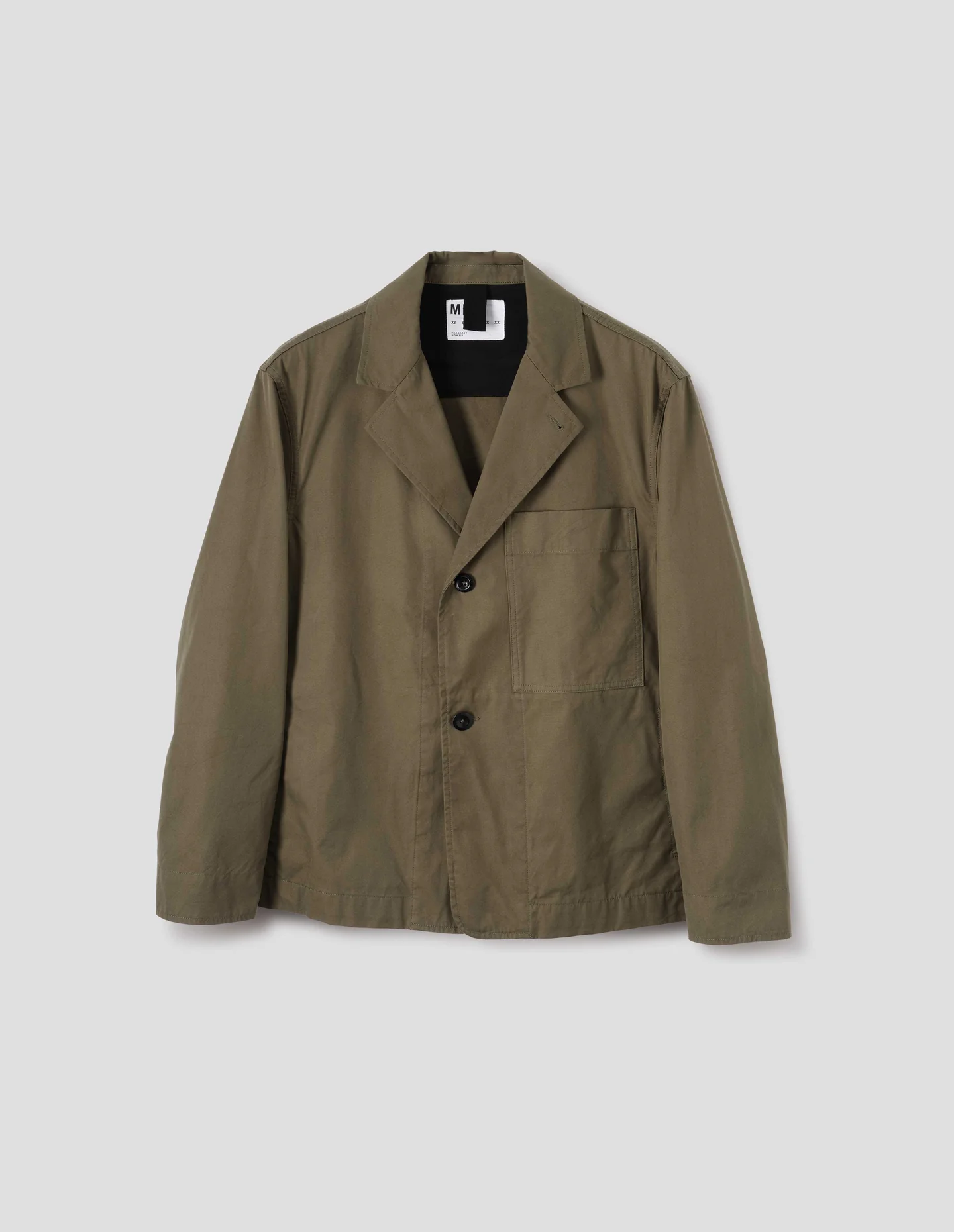
The jacket Margaret Howell has made the same way since 1972
Not because she can't afford to change it. Not because she hasn't thought about it. Because it was right the first time and she had the discipline to leave it alone.
Margaret Howell started making clothes in 1970. She was trained as a fine artist, not a fashion designer, which probably explains why she approached a shirt or a jacket the same way a sculptor approaches material — as a problem with a correct solution, not an opportunity for self-expression.
The shirt she designed in 1972 is still in the collection. The jacket has barely changed. The fabric weights, the collar proportions, the way the shoulders sit — these are things she worked out early and has not seen reason to revise.
In an industry built on newness, this is a radical position.
What hasn’t changed and why
The Howell jacket is made in a small number of factories, mostly in Britain and Japan, that have been working with her for decades. The fabrics come from mills she has relationships with going back thirty years. The construction is what tailors would recognize as correct — fully canvassed, properly interfaced, with enough structure to hold its shape and enough softness to move.
None of this is fashionable. Canvassing a jacket costs money. Buying fabric from established mills costs more than buying it from whoever is cheapest this season. Making clothes in Britain or Japan instead of elsewhere costs more still.
Howell absorbs these costs because she believes the alternative — a jacket that doesn’t hold its shape, doesn’t last, gets replaced — is not actually a jacket. It’s a garment with a jacket’s silhouette.
The difference between a Margaret Howell jacket and most things that share its price point is that hers was designed to last, and most of them were designed to sell.
The philosophy made visible
What you notice when you put on something from Howell is that it doesn’t feel like it’s trying. There’s no detail that announces itself, no seam that asks for attention. The object is simply doing its job with precision and leaving you alone to do yours.
This is, it turns out, extremely difficult to achieve. The fashion industry produces very few objects that disappear this completely into use. Most clothes have an opinion about themselves. Howell’s don’t.
That quality — the absence of unnecessary presence — is what people who wear Howell are actually paying for. They’re paying for the years she spent working out what a jacket should be, and the discipline she’s shown ever since in not undoing that work.