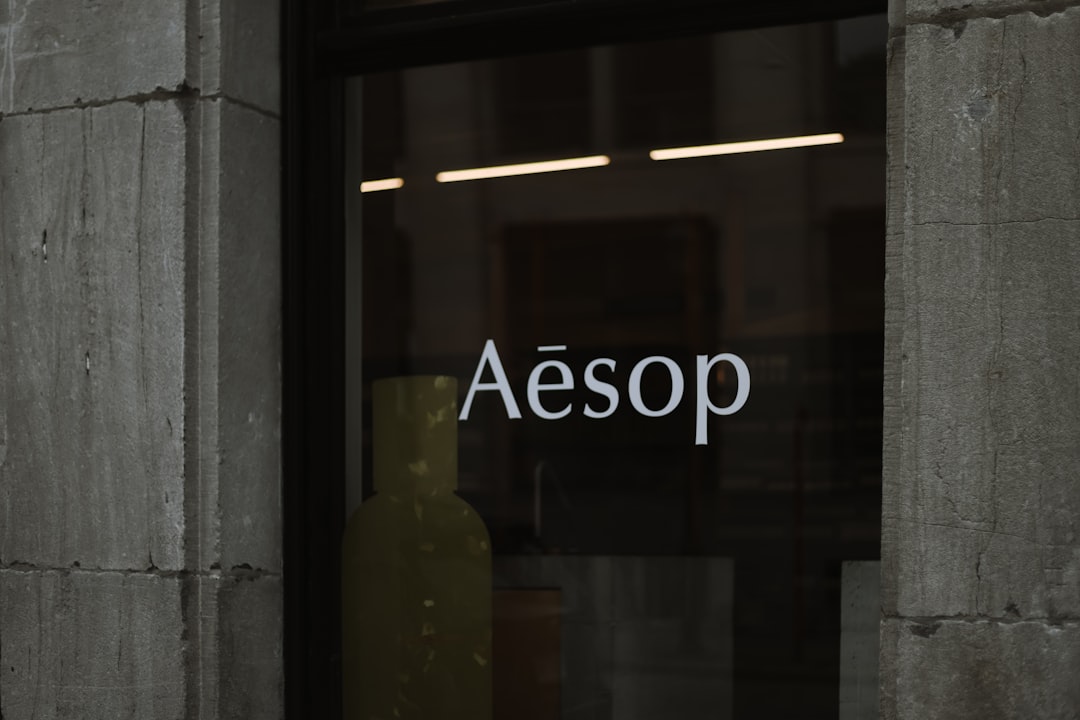
Why Aesop's stores all look different and feel exactly the same
Every Aesop location is designed by a different architect with a different brief. The experience of walking into one is immediately recognizable anywhere in the world. That tension is the whole idea.
Aesop opened its first proper store in Melbourne in 1987. It has since opened locations in dozens of cities, and not one of them looks like another. The Tokyo store uses aged timber salvaged from demolished ryokan. The Paris store on Rue Bonaparte uses green ceramic tiles floor to ceiling. The New York Brookfield Place store is panelled in brown paper bags. A store in São Paulo was built almost entirely from local clay.
Each location is commissioned from a different architect, briefed differently, designed for its specific context. The only consistent element, at a surface level, is the product on the shelves — the amber glass bottles, the dark green labels, the typography that has barely changed since the beginning.
And yet every single Aesop store in the world feels like an Aesop store within seconds of entering.
What that consistency actually comes from
It doesn’t come from visual uniformity. It comes from a set of values that are specific enough to produce consistent results even when the execution varies completely. The stores are always calm. They always smell a certain way — the products, not a manufactured ambient scent. There is always wood or stone or some material that has been used because it was right, not because it was cheap. The lighting is always considered.
These are not rules in a brand guidelines document. They are consequences of a genuine point of view about what a retail environment should be. Aesop’s founder, Dennis Paphitis, has described wanting his stores to feel like places where intellectual curiosity is welcome — where you might linger, read, think, rather than simply transact.
The architectural variety is what allows this to happen at all. If every store looked the same, the calm would become corporate. The variety proves it’s real.
A brand that can survive radical formal variation without losing its identity has found something more durable than a logo. It has found a point of view.
Why this matters beyond Aesop
Most retail brands solve the consistency problem through uniformity — every store the same fixtures, the same layout, the same materials, shipped from a central supplier. It works as a system. It produces recognizable environments. It does not produce environments that feel like anything beyond their category.
Aesop found a different answer: if your values are specific enough, you can let form follow context and still arrive at something coherent. The result is stores that feel located — in their city, their building, their moment — while still being unmistakably themselves.
It’s a difficult thing to pull off and a more interesting model than anyone else in their category has managed.