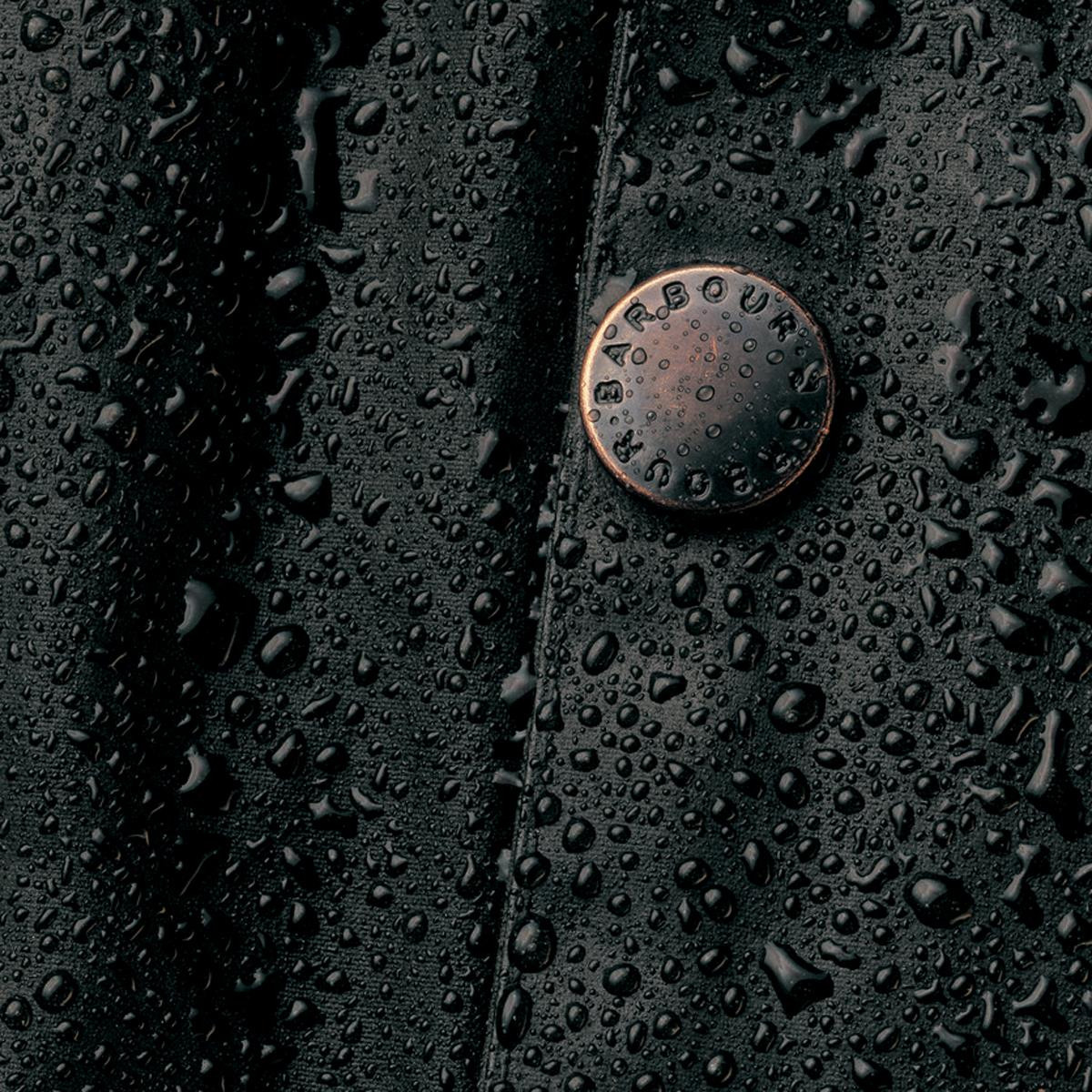
The Barbour wax jacket was designed to need you
Rewaxing is not a maintenance chore. It is the mechanism by which the jacket lasts forever. John Barbour understood this when he designed it. Most of his customers understand it when they've owned one long enough.
A waxed cotton jacket works because the wax fills the gaps between the cotton fibres, making the fabric waterproof while keeping it breathable. Over time, with use, the wax wears away — more quickly in high-friction areas like the elbows and collar, more slowly elsewhere. The jacket starts to look worn. It starts to let water in at the worn spots.
At this point, you have two choices. You can consider the jacket finished and buy another one. Or you can rewax it — warm the fabric, apply fresh wax, work it into every seam and surface — and restore it to something better than new.
John Barbour built his company in South Shields in 1894 selling oilskins to fishermen and sailors. The wax jacket that emerged from that work was designed for the second choice. It was designed to be maintained, because maintenance was cheaper than replacement and because the people who bought it were using it hard in real conditions and couldn’t afford to be cavalier about their gear.
What the wax does to the jacket over time
A Barbour jacket that has been properly maintained over years develops something that a new jacket doesn’t have: a patina that is specific to its owner. The wax builds up differently in different areas. The jacket softens where you move and holds firm where you don’t. The colour deepens unevenly in ways that record how it has been worn.
This is not deterioration. It is the jacket becoming itself. A new Barbour is a potential object. An old, well-maintained Barbour is a realized one.
The consumer industry spent the twentieth century convincing people that maintenance was inconvenient. The products that require it are often the ones most worth having.
Why this disappeared and why it matters
The disposability model won. It won because new things are exciting, because marketing budgets promote replacement over maintenance, because the true cost of cheap goods is invisible at the point of purchase. Barbour survived this partly by luck and partly by serving a customer — rural British landowners, gamekeepers, people who worked in weather — who never stopped understanding what the jacket was for.
The rewaxing service Barbour offers, where you can send your jacket to be professionally cleaned and rewaxed, is not a heritage gesture. It is the original business model. You buy the jacket once. You maintain it. It serves you for decades.
That model works for anything made well enough to be worth maintaining. The problem is that very few things are.