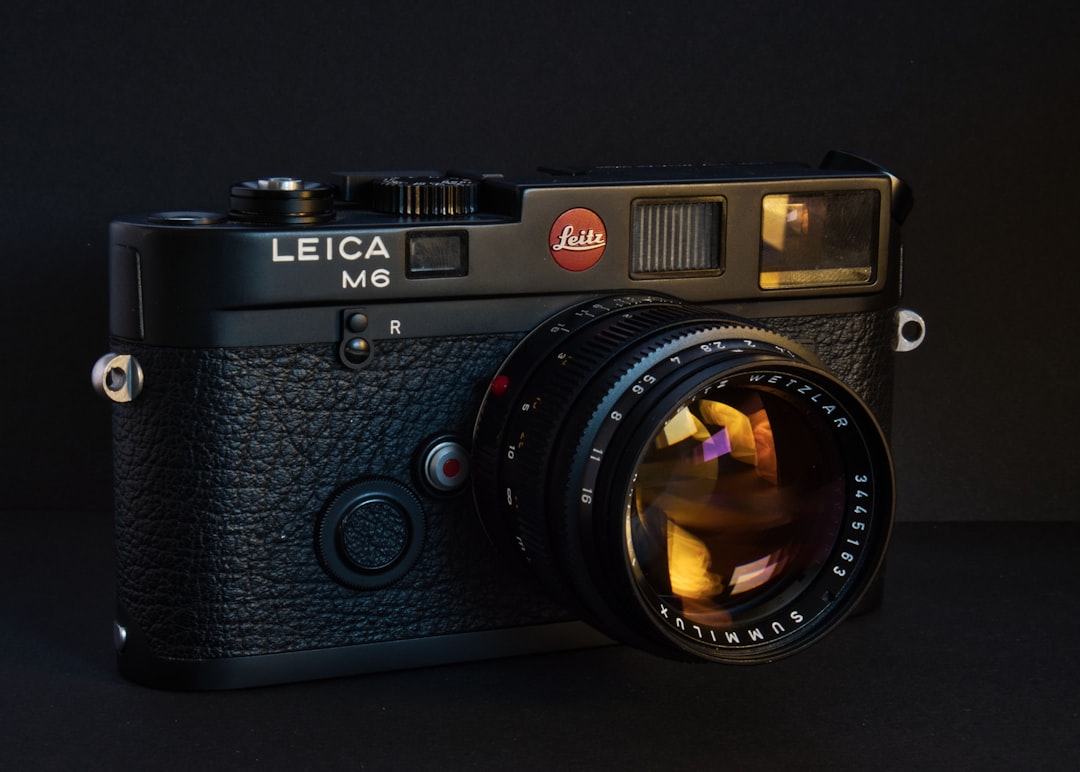
Leica has made the same camera since 1954. Each version is a conversation with the last.
The M series rangefinder has been refined continuously for seven decades without ever being replaced. That discipline — to improve without reinventing — is the rarest thing in product design.
The Leica M3 was introduced in 1954. It had a combined rangefinder and viewfinder — a single eyepiece that showed both the frame and the focus distance — which was new. It had a bayonet lens mount that was faster to use than the screw mount it replaced. It was quieter than anything else on the market. Photographers who picked one up understood immediately that it was different in kind, not just degree.
The current Leica M is the M11. It has a digital sensor where the M3 had film. Everything else is recognizably descended from the original. The dimensions are nearly identical. The lens mount is the same — lenses made for the M3 work on the M11, seventy years later. The viewfinder experience is the same: quiet, direct, immediate.
This is not nostalgia. It is the consequence of a genuine belief, maintained across seven decades of ownership changes and market pressures, that the M3 got the essential things right and that the job of every subsequent version was to extend rather than replace it.
What refinement actually looks like
The difference between the M3 and the M11 is entirely in areas that did not exist in 1954 — digital imaging, electronic exposure control, memory. The areas that did exist — the rangefinder mechanism, the shutter, the lens mount, the handling — are improved but structurally identical.
Leica has had opportunities to change this. Digital photography created enormous pressure to redesign cameras from the sensor outward, and most manufacturers did exactly that. Leica chose instead to treat the digital sensor as another component to integrate into an existing, proven form, rather than an excuse to start over.
Progress in design is not always visible. Sometimes it is the discipline of knowing what not to change.
Why photographers still choose it
The Leica M is slower to use than a modern autofocus camera. It has fewer features. It costs significantly more. People who shoot with one know all of this and choose it anyway because the constraints produce something that no autofocus camera can replicate: a specific relationship between photographer and subject that develops out of manual focusing and a quiet shutter and the particular angle of view that Leica lenses produce.
This sounds like it should be optional — a preference, not a reason. But the photographs that come from this way of working are genuinely different. Not technically superior. Differently arrived at.
The camera is the tool that makes that difference possible. Leica has been careful enough, for long enough, to keep it available.